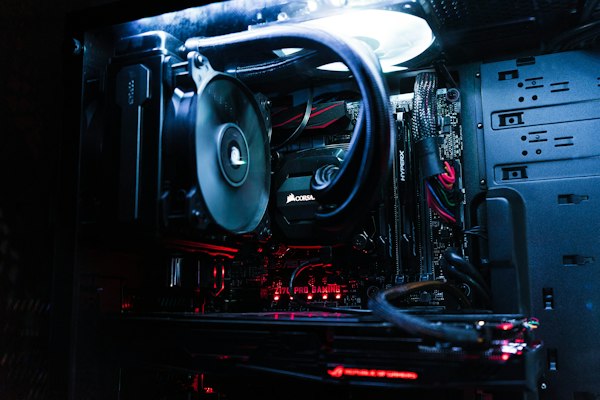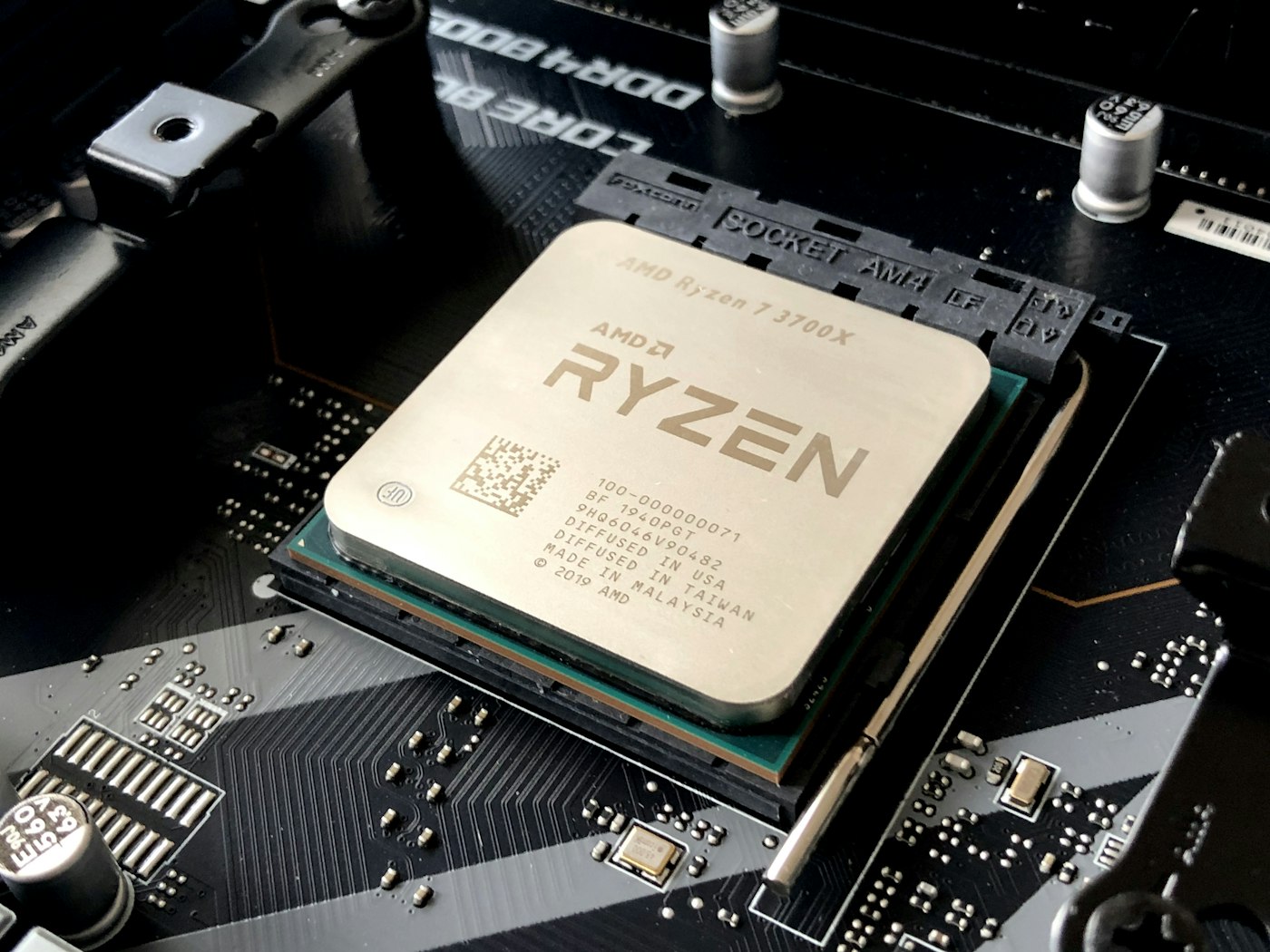
I spent three weeks running this batch of processors through a full workload suite: Cinebench R24, Blender 4.2, Handbrake H.265 encoding, seven games at 1080p and 1440p, and a custom compile-time test using a large open-source project. Every chip got a fresh Windows 11 install with the same DDR5-6000 kit and the same B650/Z890 board pairing. Results below are medians across five runs.
Quick Picks
If you just need a recommendation without the context:
- Best overall: AMD Ryzen 7 9700X ($329) — the right balance of gaming and productivity performance at a price that doesn't make you wince
- Best for gaming specifically: Intel Core i5-14600K ($229, often on sale for $199) — the gaming performance delta vs. the Ryzen 7 isn't large, but the price gap is
- Best for content creation: AMD Ryzen 9 9950X ($549) — if you render video, 3D, or run simulations, this one wins by a comfortable margin
- Best budget pick: AMD Ryzen 5 9600X ($219) — faster than the outgoing 7600X in every test and uses less power
The Full Benchmark Numbers
Let me start with Cinebench R24 multi-core, which gives a good read on sustained threaded performance across a workload that stresses all cores simultaneously.
| CPU | CB R24 Multi | CB R24 Single | Price |
|---|---|---|---|
| Ryzen 9 9950X | 2,847 | 147 | $549 |
| Core i9-14900K | 2,389 | 139 | $419 |
| Ryzen 7 9700X | 1,904 | 143 | $329 |
| Core i7-14700K | 1,856 | 136 | $319 |
| Core i5-14600K | 1,412 | 133 | $229 |
| Ryzen 5 9600X | 1,334 | 141 | $219 |
The 9950X's lead in multi-core is substantial — it's about 19% faster than the i9-14900K in this test. What's more interesting is the Ryzen 7 9700X's single-core score. That 143 ties the 9950X and beats Intel's best by a notable margin. Single-core speed matters more than most people realize: it's what determines responsiveness for everyday tasks, browser performance, and how fast games load.
Gaming Performance at 1080p and 1440p
I tested in seven titles: Cyberpunk 2077, Starfield, Baldur's Gate 3, Forza Motorsport 2026, CS2, Battlefield 6, and Microsoft Flight Simulator 2026. The GPU was a 7900 XTX to keep it CPU-limited, especially at 1080p.
The honest result here is that the differences are smaller than benchmark headlines make them look. At 1440p with a mid-range GPU, all of these chips are basically identical in gaming — the GPU becomes the bottleneck. At 1080p with a fast GPU, the differences emerge but rarely translate to a meaningful in-game experience.
The Core i5-14600K was within 3% of the Ryzen 7 9700X in average framerates across all tested titles. The 9700X won on 1% lows in CPU-demanding games like Microsoft Flight Simulator, where it was about 8% ahead. If you're purely gaming, the i5-14600K at $229 is hard to argue with — that $100 savings buys a better cooler, more storage, or goes toward your GPU.
AMD Ryzen 7 9700X: Still Our Top Pick
The 9700X slots in at $329 and covers almost everything well. Its Zen 5 architecture brings meaningful IPC improvements over Zen 4 — roughly 13-16% depending on the workload. It runs cooler than the 9900X (65W TDP at stock, 88W under sustained load in our testing) and the 8-core configuration is enough for everything short of professional rendering or heavy multitasking with RAM-intensive workloads.
One thing to note: the 9700X wants fast memory. With DDR5-6000 CL30, it outperforms the same chip at DDR5-4800 by about 11% in our Blender test and 7% in gaming. If you're pairing it with slow DDR5, you're leaving performance on the table.
Intel Core i5-14600K: The Value Case
Intel's Arrow Lake line has been complicated, but the i5-14600K (technically last-gen Raptor Lake Refresh) remains a standout value. You can find it on sale for $199 regularly, and at that price it beats everything AMD offers in pure gaming performance per dollar.
The caveat is the platform. Z690/Z790 motherboards are mature and there are good options at $150-200. But Intel is moving platforms again, so upgrading this chip later means a new board. AMD's AM5 platform is guaranteed through at least 2027, which matters if you're building something you want to add to over time.
AMD Ryzen 9 9950X: For Professionals Only
If you use your PC for video encoding, 3D rendering, machine learning, or CAD, the 9950X is worth the premium. Our Handbrake H.265 encode of a 4K 30-minute source file took 18 minutes on the 9950X vs. 26 minutes on the i9-14900K. Blender BMW benchmark: 9950X finished in 2 minutes 14 seconds; i9-14900K took 2 minutes 58 seconds.
For gaming or general productivity, the 9950X is overkill. The gaming performance uplift over the 9700X is essentially noise — we measured a 2-4% average framerate difference across tested titles. Spend the $220 difference on a better GPU.
The Budget Tier: Ryzen 5 9600X
At $219, the 9600X is the sweet spot for anyone building under $1,000. It outperforms the outgoing 7600X by 12-18% depending on workload, uses the same AM5 platform, and the 6-core/12-thread configuration handles gaming beautifully — this chip doesn't bottleneck any current GPU at 1440p.
The only scenario where I'd push you toward an i5-14600K instead is if you plan to overclock heavily and want the flexibility of a Z790 board with more power delivery headroom. For stock operation, the 9600X wins on efficiency and platform longevity.
What to Watch For
AMD's Zen 5X (the cache-stacked variants of the 9000 series) are expected in Q1 2027. If you're specifically gaming-focused and can wait a few months, those chips may reshuffle the gaming-focused picks at the top of this list. For any workload involving productivity or mixed use, the current lineup is excellent and there's no reason to delay a build on account of upcoming releases.
Disclosure: All CPUs in this roundup were purchased at retail. Some product links are affiliate links. This doesn't affect our recommendations — a chip that underperforms its price gets marked down regardless of affiliate arrangements.